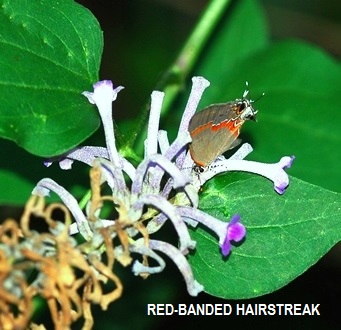
RED-BANDED HAIRSTREAK NECTARING AT LANTANA BLOSSOMS
If are looking for a plant that will attract both hummingbirds and butterflies it would be hard to find a better plant than lantana. It is a hummingbird and butterfly magnet, prolific bloomer, withstands dry conditions, and requires little care.
From the time they begin blooming in late spring to well into the fall, lantanas produce a seemingly endless crop of flowers that contain nectar prized by ruby-throated hummingbirds and butterflies alike.
Believe it or not, there are more than 150 species of lantanas. These hardy plants are native to both the African and New World tropics. Some are shrubs that reach a height of six to 10 feet; others trail across the ground. However, one trait they all share is that they have woody stems.
Throughout much of Georgia, lantanas are considered perennials. Although their leaves and stems are killed by frost, their roots are often able to survive and sprout a new crop of stems and leave each spring.
With such a dizzying variety of lantanas to choose from, you are probably scratching your head trying to decide which is the best lantana for your yard. While I have tried a number of varieties, the one I prefer is Miss Huff. This variety can survive winter temperatures as low as 0˚F. During the past four decades, the Miss Huff lantanas growing in my Middle Georgia yard temperatures have survived temperatures as low as 4˚F. Other varieties do not do well at all when the thermometer dips into the 20s and below.
Miss Huff is a shrub. The largest Miss Huff that I have ever seen grows in front of the Georgia Nongame Wildlife Conservation Section office in Forsyth. Each summer this giant reaches a height of five feet and measures more than 35 feet in diameter.
In late August, it is not uncommon to see 12-24 rubythroats dividing their time between the feeders hung around the porch of the office building and the lantana growing nearby. At the same time, a couple of dozen butterflies are usually nectaring on the petite lantana blossoms.
Miss Huff sports orange and pink flowers arranged in tiny bouquets measuring less than two inches across. Like most lantanas, its flowers change color as they age.
Other varieties of lantanas display blossoms that range from white and purple, yellow and orange, pink and magenta and rose and gold to solid colors like yellow, white, red and pink.
Plant breeders have developed a number of new varieties adorned with blooms in a kaleidoscope of colors. Here is a short list of some of these newcomers: American red, confetti, cream carpet, gold mound, Irene, new gold, patriot rainbow, radiation and white lightning.
I should mention that, while some new varieties grow no more than two feet tall, they produce far less nectar than some of the older, taller types such as Miss Huff.
One thing that makes them a favorite among gardeners is that they require little care. About all that you have to do is trim back the plant’s dead stems prior to the next growing season.
Lantanas are not plagued by a host of insect pests or diseases.
In addition, they require little water or fertilizer. In fact, if they are watered them too frequently and/or treated to liberal doses of fertilizer, they tend to produce more leaves and stems and fewer flowers.
Lantanas will grow in both direct sunlight and partial shade. However, these hardy plants do best in open sunshine.
One of the few negatives associated with lantanas is that, in some places in South Georgia, some varieties will escape into the wild. With that in mind, ask your county cooperative extension agent, or other gardening expert, which varieties should not be planted in your neck of the woods.
Whether your yard is large or small, lantanas deserve a place in your landscape. Once they become established, sit back and enjoy the beauty of the lantana flowers and the hummingbirds and butterflies that will frequent the nectar-rich lantana flowers.